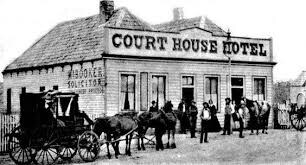
30th Annual Conference-Smythesdale, Vic
Smythesdale
20-09-2026 15:00 – 26-09-2026 17:00
Next AMHA Conference: 20-26 September 2026
See below for Call for Papers and Registration
Smythesdale, near Ballarat, Victoria.
The Rise, Peak, and Legacy of Gold Mining in Smythesdale, Victoria
Smythesdale is a small township in Victoria, Australia, located approximately 20 kilometres west of Ballarat. It is renowned for its rich gold mining heritage, which shaped the region’s development and contributed significantly to Victoria’s gold rush era.
Gold was first discovered in the Smythesdale area in the early 1850s, during the height of the Victorian gold rush. The news of gold finds near Ballarat quickly spread, bringing prospectors, miners, and entrepreneurs to the region in search of fortune. Smythesdale became a focal point for alluvial gold mining, with diggers working the creeks, gullies, and shallow soils.
By the mid-1850s, Smythesdale had transformed from a quiet rural area into a bustling mining township. The population swelled as thousands arrived, and a vibrant community emerged with pubs, shops, schools, and churches. The town was officially surveyed in 1855. Mining methods evolved from simple panning and cradling to more advanced sluicing and puddling as miners sought richer deposits.
Deep lead mining began in the area in the later 1850s and 1860s. Companies formed to sink shafts and drive tunnels into ancient riverbeds buried beneath layers of basalt. These deep leads yielded considerable quantities of gold, supporting the local economy and leading to the establishment of substantial mining infrastructure.
Today, Smythesdale retains many reminders of its gold mining past. Heritage buildings, old mine workings, and historical markers can be found in and around the township. The area’s history is celebrated through local museums, walking trails, and community events. Gold mining shaped the identity of Smythesdale, leaving a legacy that continues to attract visitors and enrich the region’s culture.
The history of gold mining in Smythesdale is a story of ambition, ingenuity, and resilience. From its origins in the gold rush era to its lasting heritage, the township stands as a testament to the transformative power of gold and the enduring spirit of those who sought it. Smythesdale’s gold mining history remains an integral part of Victoria’s past and continues to inspire interest today.
2026 CONFERENCE SMYTHESDALE-CALL FOR PAPERS
The Organizing Committee Invites offers of presentations on any topic relevant to mining history, or history of the area.
For general information on the conference please refer to the AMHA website at https://www.mininghistory.asn.au/next-conference/
Presentations
Individual oral presenters other than keynote speakers will be allocated 20 minutes with an additional 5 minutes for questions. Strict timing will be adhered to. Presentations should be saved on a memory stick and handed to Stephen Imrie well before the scheduled session.
Advice for Speakers, including suggestions for preparation of Powerpoint slides, is available on the AMHA website under Conference Organisation on the Members page at: https://www.mininghistory.asn.au/conference-organisation/
Anyone unable to access the website can contact the AMHA Secretary at aldbar@dcsi.net.au
There will also be the opportunity for poster presentation and time for presenters to talk to their posters. Posters should be designed to fit an area of ca. 0.9x1.2m Poster boards will be provided.
Abstracts
Offers of both oral and poster presentations can be made by submitting an extended Abstract.To ensure a consistent format and assist with editing, please use the Abstract Template which can be downloaded as a Word file at the link below. Abstracts should be up to one page in length including text, images and references and will be printed on a single page.
http://www.mininghistory.asn.au/next-conference/
It is the author’s responsibility to ensure that the abstract is correct in all details. On completion save it as a Word file with your name in the file name and email it as an attachment to Geoff Anderson at aldbar@dcsi.net.au by June 30th 2026.
PLEASE NOTE: IF YOU WISH TO PAY BY EFT RATHER THAN BY CREDIT CARD, REQUEST AN INVOICE AT THE CHECK OUT AND WHICH CONTAINS THE AMHA BANK ACCOUNT DETAILS