

Australasian Mining History Association Inc.
Powered by
Events
Upcoming
Past events
Aug
31
2025
Past Event
29th Annual Conference-Broken Hill
Broken Hill Civic Centre
31-08-2025 18:00 – 06-09-2025 16:30
29th Annual Conference-Broken Hill
Australia’s First Heritage Listed City
31 August to 6 September 2025
Conference Program 31 August to 6 September
Sunday 31st August
6.00 pm
Registration and Mayoral Reception, Albert Kersten Mining and Minerals Museum, corner Crystal and Bromide Streets
Monday 1st September
8.30 am
Registration, Civic Centre, Level 1, Rooms 2 and 3
9.00 am
President's Welcome.
9.15 am
Session 1. Broken Hill Now and Then
Keynote Address: Leigh Clifford: Broken Hill to Beijing: The Mining Industry's Half-Century Transformation.
9.50 am
Shelley Mills: The Broken Hill Orebody.
10.30 am
Morning Tea
11.00 am
Rob McLean: The Heyday of Broken Hill: 1950 to 1970.
11.30 am
Keynote Paper Gordon Toll: Broken Hill's Commercial Offspring - A Personal Reminiscence.
12.00 pm
Patrick Walta: Broken Hill Mines Ltd.
12.30 pm
Lunch
1.30 pm
Jeffrey Nixon: Broken Hill South Mine - the 1480 Long Drive.
2.00 pm
Robert Barnes: Traces of the Fortune Seekers before the Broken Hill.
2.30 pm
Steve Sorrell: The History of Type Locality Mineral Discoveries at Broken Hill.
3.00 pm
Christeen Schoepf: Relics of Mines and Mines Past; Using the Notion of Object Biography to Discover Stories of Mining in Broken Hill and the Transport of Ore to Port Pirie.
3.30 pm
Katherine Hawkins: Long Duration Energy Storage Utilizing Underground Rock Caverns
4.00 pm
Afternoon Tea
4.30 pm
Australasian Mining History Association Inc Annual General Meeting
Tuesday 2nd September
Tour of the Broken Hill Line of Lode, Pinnacles and the RFDS. Packed Lunch and entry to the RFDS included.
8.30 am
Depart Broken Hill Visitor Services Centre, 23-27 Bromide Street
5.30 pm
Drop off at Visitor Service Centre and accommodation
Wednesday 3rd September
8.30 am
Registration
9.00 am
Session 2. Mining Technology
Keynote Paper: Robert Williamson: Advances in Mineral Sampling and Laboratory Analysis.
9.45 am
Keynote Paper: Jeffrey Nixon: Shafts of the Broken Hill Line of Lode.
10.30 am
Morning Tea
11.00 am
Ross Both: Haddon King: A Visionary Geologist.
11.30 am
Neil Huybregts: The Chilean Mill.
12.00 pm
Matthew Churchward: The Strange Intangible Phenomenon” Pioneering applications of Electricity in Victorian Mining, 1875-1914.
12.30 pm
Lunch
1.30 pm
Jim Morrison: Restoring the 1930s Glass Model at Charters Towers.
2.00 pm
Derek Reid: The Beehive Mine Chimney: Maldon's Mining Memorial.
2.30 pm
John Hayman: Hard Rocks, Hard Times: Accidents and Illness Among the Early Gold Miners.
3.00 pm
Afternoon Tea
3.30 pm
Joseph Ogierman: Radium Hill - Australia’s First Uranium Mine - AUKUS 1.0?
4.00 pm
Nick Williams: Shackleton, Mawson and Oertling - an unexpected juxtaposition.
4.30 pm
Jeffrey Williams: Mining Deaths in the Broken Hill District - 1885 to present.
6.30 pm
Conference Dinner, The Blonde Room, Broken Hill Hotel
Thursday 4th September
Tour to Silverton, Day Dream Mine, and Mundi Mundi Lookout and John Simmons Fauna and Flora Sanctuary with the Living Desert Sculptures. Entry to Silverton Gaol and Schoolhouse Museums and surface tour of Day Dream Mine and the John Simmons Fauna and Flora Sanctuary with the Living Desert Sculptures and lunch at the Silverton Hotel included.
8.30 am
Depart Broken Hill Visitor Services Centre, 23-27 Bromide Street
6.30 pm
Drop off at Visitor Service Centre and accommodation
Friday 5th September
8.30 am
Registration
9.00 am
Session 3. Mining People
Peter McCarthy: Mine Manager Training at Zinc Corporation and NBHC in the 1970s.
9.30 am
Michael Webb: Deconstructing the Life of One of Australia's Eminent Mining Captains.
10.00 am
Louise Spencer: John Corea: The First Korean Miner in Australia.
10.30 am
Morning Tea
11.00 am
Geoff Randall: 'Heroes and Villains': The 1892 Broken Hill Strike.
11.30 am
Ross Both: 'And Packard is your Name!': The 1909 Broken Hill Strike.
12.00 pm
Peter Benkendorf: Broken Hill Mines and Infrastructure: The Engineering Centenary Plaque Report (Delivered by Jeff Nixon)
12.30 pm
Lunch
1.30 pm
Geoff Hudson: Follow the Gold: A Family History
2.00 pm
Wendy Carter: The Halls Creek Goldfield and the Ruby Queen Gold Mine, Western Australia.
2.30 pm
Howard Combes: Survey of Zinc Corporation Buildings. (Delivered by Jeff Nixon)
3.00 pm
Preview of 2026 conference and proposals for 2027 conference
3.30 pm
Afternoon Tea
4.00 pm
AMHA Advisory Committee Meeting
Saturday 6th September
Broken Hill Trades Hall, Guided Heritage walking tour (two groups, fee include), Sulphide Street Railway and Historical Museum (entry included) and optional visits to galleries, museums and the self-guided cemetery walk. Bus drop-off and pick up available. Provide own lunch.
9.00 am
Meet at the Trades Hall for guided tour.
10.30 am
Meet at Visitor Tourist Centre for guided heritage walk.
12.30 pm
Meet at the Sulphide Street Railway Museum.
2.00 pm
Bus assisted travel from Railway Museum to other tourist sites.
5.00 pm
Return to accommodation
Broken Hill was discovered by Charles Rasp in 1883 who believed that the outcropping gossan might be tin bearing. With six others, Rasp pegged the entire outcrop, and the Broken Hill Proprietary Company Limited was created in 1885.
Rasp reported finding silver-lead mineralisation and the ensuing rush brought thousands to the area. Initially, early mining exploited the near surface oxidised ore which was carted to Adelaide by camel, wagon and pack mules.
Hand selection of rich ore was the practice but was very wasteful in that lower grade material was discarded. The froth flotation method developed concurrently by BHP and a Melbourne chemist became known as the Potter-Delprat Process. This process allowed the treatment of ore and waste dumps and has been adopted world-wide for the concentration of sulphide minerals.
In recognition of the development of froth flotation in Broken Hill, the Conference will emphasise the significance of technological development in the minerals industry and will include invited keynote speakers as well as submitted papers on any topic related to Australasian mining history. You are encouraged to attend and submit a paper for this conference. For information regarding papers please contact Jeff Nixon on jeffrey.nixon@outlook.com.
Planning of the conference is largely comlete and the preliminary program is indicated below, so save the dates 1st to 6th September. It is recommended that you arrive in Broken Hill by 5 pm on Sunday the 31st August for the Mayoral Receptiion at 6.00pm.
The Mayor of Broken Hill has kindly offered to host a reception on the Sunday evening at the Geocentre which houses a wonderful display of mineral specimens and mining artifacts.
Presentation of papers will commence on the Monday at the Civic Centre, a modern building with excellent facilities. Over the week there will be three days of conference papers and three days of site visits and tours, finishing on Saturday 6th September.
One of the tours will include an overview of the Line of Lode mineralisation with visits to mine sites and the RFDS. On Thursday we visit Silverton, the Day Dream Mine, and the Living Desert State Park. Highlights of the Park are the John Simons Fauna and Flora Sanctuary, with the Sanctuary Cultural Walk Trails and the 12 sandstone sculptures. A guided walking tour of the City centre and visits to historic sites and art galleries is scheduled for Saturday. Further details are to be found under "Tickets" below.
To minimise plastic waste, please bring along water bottles. Refilling will be available from the Coaches. Please note that the program is subject to change without notice.
Accommodation is tight in Broken Hill in September and it is recommended that bookings are made as soon as possible. As the Civic Centre is centrally located it is recommended that those without transport book near the city centre where there are numerous hotels/motels within walking distance of the Civic Centre. Four that have been suggested are the Ibis Styles, Comfort Inn Crystal, the Lodge Outback Motel and Desert Sands Motel.
Travel to Broken Hill at the time of writing is as follows:
From Adelaide
Rex Airlines: daily except Saturday
Public bus: Sunday and Tuesday
An AMHA bus from Adelaide to Broken Hill and return will be arranged if there are sufficient numbers who require this service. Depart Adelaide Airport 9.30am, 31 August with a pickup in the City. Returning to Adelaide Sunday 7th September arriving by 4pm. Please purchase a ticket below.
From Sydney
Rex Airlines: daily
Qantas: Monday, Thursday, Friday, Sunday
Train: Monday
From Melbourne
Qantas: via Sydney
Train to Mildura then bus to Broken Hill: Wednesday and Friday
If you require assistance in travel arrangements including accommodation and transport to and from Broken Hill, please call the Travel experts at Helloworld Travel Broken Hill and let them know you are a part of the 2025 AMHA conference and their corporate sales consultant will be able to assist you.
Alternatively contact the Broken Hill Visitor Information Centre website: https://www.visitbrokenhill.com/Plan/Visitor-Information-Services
The weather in early September is likely to be cool to cold overnight and comfortable and sunny during the day with a low chance of rain.
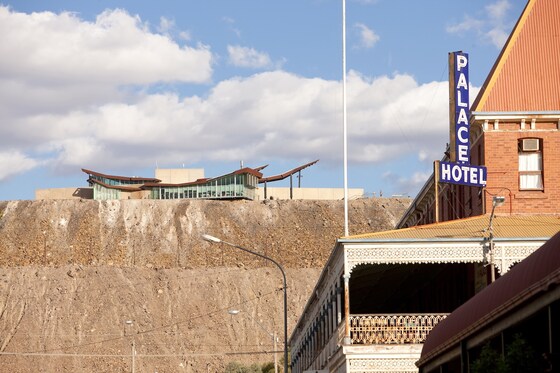
AMHA gratefully acknowledges the assistance of Foundation Broken Hill, Lodestone Mines, through AMHA member Robert Williamson, and the Broken Hill City Council for their assistance and support of the Conference. Images supplied by the Broken Hill City Council.
To register for the Conference and other activities please select "tickets" below and follow through to the payment page. To pay by EFT go to https://amha.tidyhq.com/public/pages/broken-hill-conference-payment-by-eft If you have have a problem with registration please email grthudson@icloud.com
Sep
09
2024
Past Event
28th AMHA Annual Conference Leonora
Leonora Bowling Club
09-09-2024 8:00 – 13-09-2024 15:00
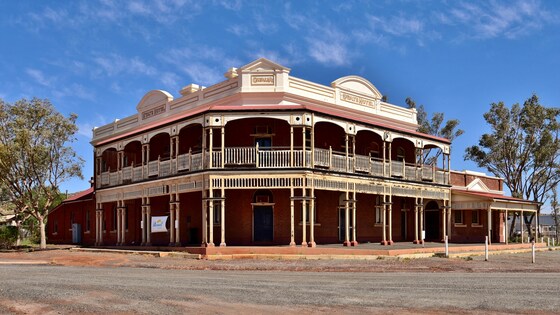
An exciting and informative program has been arranged in the historic towns of Kalgoorlie-Boulder, traditional lands of the Marlinyu Ghoorlie peoples, and in Leonora-Gwalia, in the traditional lands of the Darlot peoples, in the Northern & Eastern Goldfields of Western Australia.
The Conference package commences with an optional get-together, meal and talks at the Goldfields Repertory Club on Friday 6 September at 5.30 pm, followed by tours of the Kalgoorlie-Boulder region on Saturday 7 & Sunday 8 September. The Conference will commence on Monday 9th September departing Kalgoorlie by bus and visiting various historical & mining-related sites on the way to Leonora. Sessions for the presentation of papers, two optional half-day field trips & social evenings will be held Tuesday to Friday returning to Kalgoorlie on Friday afternoon.
Highlights of the conference will be keynote presentations by Dr Sandra Close of Surbiton Associates, Chris Lalor, past Director, Sons of Gwalia Ltd, and Raleigh Finlayson, CEO, Genesis Minerals Ltd.
The AMHA conference is grateful for the generous sponsorship from Northern Star Resources Ltd., the Shire of Leonora, Leonora Motor Inn and Genesis Minerals Ltd. with a lot of much-appreciated assistance & support from the Eastern Goldfields Historical Society.
Members of the Australasian Mining History Association can take advantage of the Early Bird Registration and the reduced rate of conference registration. If you are not a member and would like to take out membership, please visit https://amha.tidyhq.com/ and click on Memberships to apply and pay for Membership BEFORE you register for the conference.
Payment by Secure Credit Card transaction is our preferred method so continue on this website to register on-line and pay at the Checkout. WE HAVE BEEN HAVING SOME ISSUES WITH THE CREDIT CARD PAYMENT SYSTEM SO PLEASE PAY BY EFT IF YOU ARE AFFECTED. THE EARLY BIRD REGISTRATION HAS BEE EXTENDED TO FRIDAY 5 JULY AT 11.59 AEST. To pay by EFT or cheque you will need to complete the registration form that is here https://amha.tidyhq.com/public/pages/leonora-conference-payment-by-eft-and-cheque and return it by email or post.
As soon as possible please book your accommodation in Kalgoorlie & Leonora, as well as your travel from home to Kalgoorlie. If you require transport from Kalgoorlie to Leonora & return see "Tickets" below. For information on travel to Kalgoorlie and accommodation in Kalgoorlie and Leonora please see https://amha.tidyhq.com/public/pages/leonora-conference-travel-and-accommodation
The average temperatures in Leonora-Gwalia in September are down to 12 degrees at night & up to 23 during the day. Sunrise around 6 am & sunset around 5.45 pm. UV index average of 5 so please bring your hats, long sleeves, long trousers, sunglasses & sun lotion if you care about these things. September statistically has the least rainfall of any month so let us hope it stays that way this year! After all the early rain this year, it should be a bumper wildflower season & the conference is perfectly timed for that!
Please bring your own water bottle to keep you hydrated & to reduce plastic wastage!
Oct
15
2023
Past Event
27th AMHA Annual Conference Reefton
Reefton
15-10-2023 17:00 – 20-10-2023 15:30
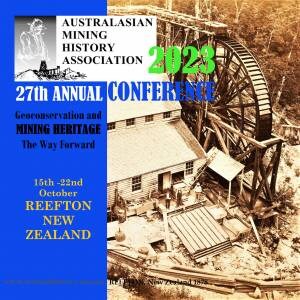
The 27th AMHA conference will be held at Reefton on the west coast of the South Island of New Zealand, 15-20 October, 2023. A key theme of the conference will be Geoconservation and Mining Heritage – the Way Forward, but presentations related to other mining history topics will also be considered.
Call for papers Offers of both oral and poster presentations can be made by submitting an extended Abstract To ensure a consistent format and assist with editing, please use the abstract template, which can be downloaded as a Word file at the link below. Abstracts should be up to a one page in length including text, images and references and will be printed on a single page. Send Abstracts to John Taylor at taylor.john.nz@gmail.com
Saturday 21 and Sunday 22 October: Post-Conference Tour to Charleston Goldfield and Denniston Coalfield sites, staying overnight Saturday and Sunday in Westport.
